
English| EUR
Suggested for you
More currencies
Choose a language
The Ha Giang loop spans 350 kilometers of mountain passes, river valleys, and border villages across Vietnam's northernmost province. Weather dictates visibility, road safety, and whether terraced fields glow green or gold. Timing your ride determines whether you navigate in sunshine or monsoon fog.
Quick answer
October through November offers the best conditions for the Ha Giang loop tour, combining dry weather, clear mountain visibility, and golden rice terraces during harvest season. March and April provide a secondary window with blooming buckwheat flowers and moderate temperatures. July through August brings heavy monsoons with landslide risk and reduced visibility, while December through February delivers cold temperatures and occasional frost at high elevations.
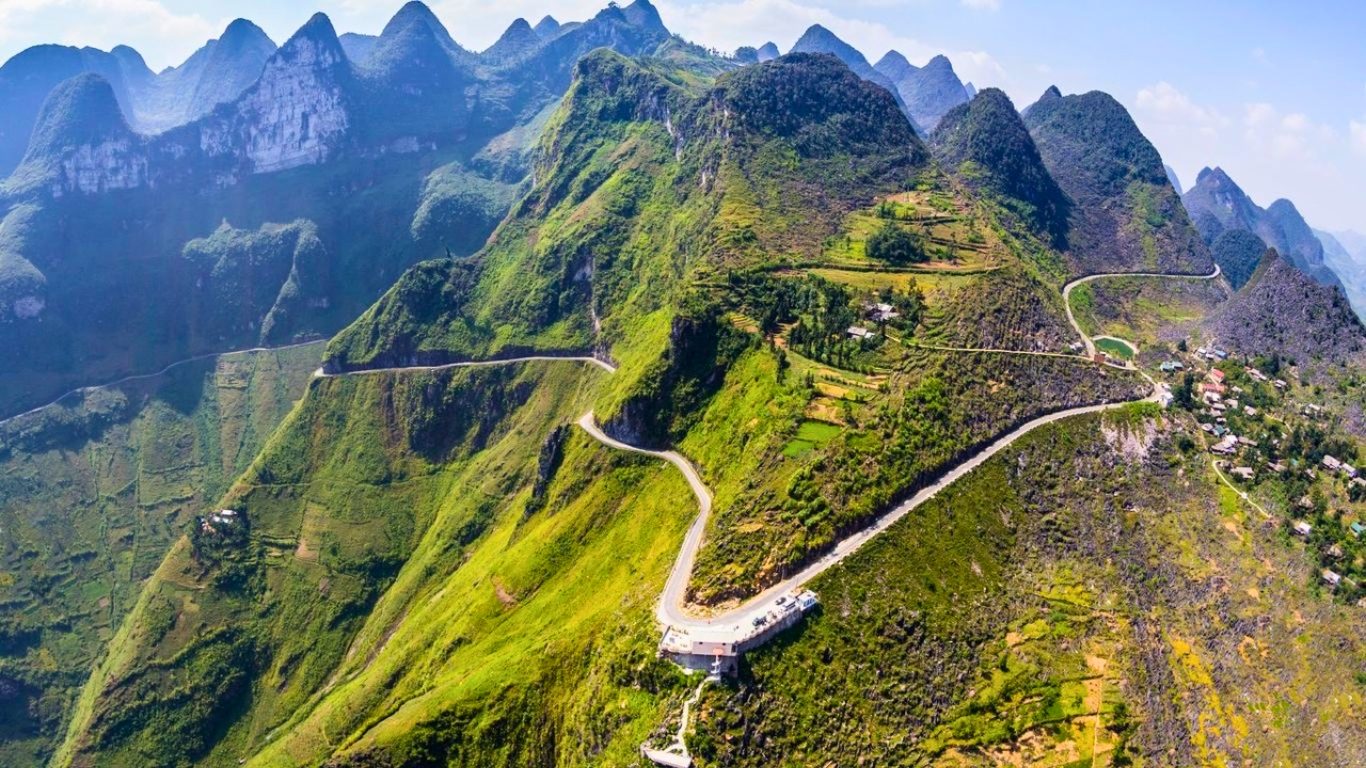
Ha Giang Province experiences 240 rainy days annually at higher elevations, yet the dry months transform the northern highlands into one of Southeast Asia's most dramatic motorcycle routes. The optimal touring window for the Ha Giang loop spans just eight weeks each year when weather, road conditions, and agricultural cycles align. October through early November represents peak conditions. Daily temperatures range 18–25°C at valley level, dropping to 12–15°C at Ma Pi Leng Pass. The northeast monsoon has not yet arrived, leaving mountain roads dry and visibility extending 40–60 kilometers across karst formations. Rice terraces turn amber as Hmong and Tay farmers harvest, creating the landscape photographers associate with northern Vietnam. This window attracts the highest visitor numbers—hostels in Dong Van and Meo Vac book three weeks ahead, and weekend traffic on the Quan Ba–Yen Minh segment can slow to 20 kph. March and April offer a quieter alternative. Buckwheat fields bloom pink and white across the Dong Van Plateau, temperatures climb to 22–28°C, and the spring dry season keeps roads passable. Visibility remains strong, though afternoon haze builds by mid-April. Domestic tourism peaks during Vietnamese holidays (Reunification Day on April 30, International Labour Day on May 1), compressing availability for five-day windows. Outside these dates, guesthouses rarely fill. The monsoon months—July through September—see daily rainfall averaging 280–320mm in August alone. Landslides close sections of QL4C between Dong Van and Meo Vac multiple times each season, sometimes for 48–72 hours. Fog reduces visibility below 100 meters on high passes by mid-morning. Rental agencies limit motorcycle availability, and experienced guides pause operations. Tour operators who run year-round adjust itineraries to lower-elevation routes, skipping Ma Pi Leng when conditions deteriorate. Winter months from December through February bring cold fronts from southern China. Temperatures at Dong Van township drop to 3–7°C overnight, with frost reported above 1,400 meters. Clear skies dominate, offering exceptional visibility, but thermal gear becomes essential. Traffic falls to its annual low—many family-run homestays close until March. Riders willing to layer clothing find empty roads and cooperative light for photography, though mechanical issues with rented motorcycles increase in cold conditions.
“Rice terraces turn amber as Hmong and Tay farmers harvest, creating the landscape photographers associate with northern Vietnam.”
The optimal time for the Ha Giang Loop is during the dry seasons of autumn (September to November) and spring (March to May) to ensure stable road conditions and clear visibility. For daily travel, arriving early is essential to navigate mountain passes safely before daylight fades.
Cool, dry; 15°C–25°C
This period features harvest season with golden rice terraces. Stable weather reduces the risk of rain on mountain roads.
Mild, pleasant; 18°C–28°C
Flowers bloom across the landscape. The temperate climate is suitable for long days of riding.
Hot, humid; 22°C–32°C
Expect frequent rainfall and potential fog. Road surfaces may be slippery during these months.
—
Arriving at your starting point between 08:00–10:30 provides the necessary daylight to reach your next stop before sunset.
Verdict: The best time for the loop is during the dry months of October or April, departing early each day within the 08:00–10:30 window.
The standard Ha Giang Loop follows a 3-day circuit through Vietnam's northern mountains, covering approximately 350 kilometers from Ha Giang town back to the starting point. This plan assumes early starts to navigate mountain passes safely and reach accommodations before dark.
Depart Ha Giang town around 08:00–09:00, riding 45 kilometers north to Quan Ba. Stop at Heaven's Gate viewpoint for photos of the twin karst peaks, then continue to Yen Minh for lunch and onward to Dong Van, arriving by late afternoon. Overnight in Dong Van (total ~150 km, 6–7 hours with stops).
Start early to visit Dong Van Old Quarter and the Sunday market if your timing aligns. Ride 25 kilometers north to Lung Cu Flag Tower at Vietnam's northernmost point, then return and head east through Ma Pi Leng Pass—the loop's most dramatic section with sheer cliff views. Overnight in Meo Vac or Du Gia (total ~100 km, 5–6 hours).
Navigate the zigzagging cliffside road above the Nho Que River; allow extra time for cautious riding and photo stops. Weather conditions here change rapidly, so dry-season timing reduces landslide risk.
Ride southwest from Meo Vac through Mau Due village and back toward Ha Giang town. The route descends gradually with fewer technical sections, making it easier to cover the ~100 kilometers by mid-afternoon. Arrive back in Ha Giang by 15:00–16:00, leaving time for any return travel connections.
Pack for variable mountain weather and ensure you have the required travel documentation before departing for the loop.
Access to the Ha Giang loop itself is free of charge, as it consists of public roads throughout the province. Travelers should anticipate incidental costs for regional permits, fuel, and individual attraction fees.
Verdict: Most visitors pay only the mandatory border permit fee, though total costs fluctuate based on individual entrance fees for specific local caves or historical sites.
The roads comprising the Ha Giang Loop remain accessible 24 hours a day throughout the week. For safety reasons and optimal visibility, travelers are advised to plan their daily travel during daylight hours.
Everything you need to know about ha giang loop tour best time
The ha giang loop tour best time is generally during the dry season from October to April, when rainfall is minimal. This period provides stable road conditions for traversing mountain passes and deep valleys.
To experience fewer travelers, consider visiting during the shoulder months of March, April, or October. Planning your trip outside of major public holidays and weekend peaks helps ensure quieter roads and more available homestays.
The buckwheat flower season in late October and November provides a colorful landscape perfect for photography. Many travelers also prefer the spring months when plum and peach blossoms bloom across the northern highlands.
Based on travel logistics, the best arrival window for daily sightseeing is 08:00–10:30. Starting within this timeframe ensures you reach your next destination or homestay before sunset on these winding roads.
While the loop is open year-round, the summer months bring heavier monsoon rains that can affect road safety. Always check local weather reports and road status updates regardless of your chosen travel window.
The loop itself is free to access, meaning the entry fee is 0 VND. Individual attractions located along the route, such as specific caves or local museums, may charge their own separate admission fees.
Preparation for your adventure should include sturdy footwear, a high-quality helmet, and layers for the cooler mountain air. Ensure you have your international driving permit and travel insurance documentation ready for verification at checkpoints.
Essential Ha Giang Loop Tour Tips
Read more Tickets & toursHa Giang Loop Tour Groups
Read more Guide3 Day Ha Giang Loop Itineraries
Read more GuideHa Giang Loop Tour Route Map
Read more GuideHa Giang Loop Tour Gallery
Read more Tickets & toursHa Giang Loop Tours from Hanoi
Read more Tickets & toursHa Giang Loop Tour Companies
Read more Tickets & toursHa Giang Loop Motorbike Tours
Read more GuideHa Giang Loop Tour Price & Cost Guide
Read more