
English| EUR
Suggested for you
More currencies
Choose a language
The Ha Giang Loop is a multi-day motorbike journey through Vietnam's northernmost province, tracing provincial roads past terraced rice fields, limestone karst peaks, and ethnic minority villages. This page breaks down what you'll actually spend — from motorbike rental and fuel to accommodation and meals — so you can plan a realistic budget for the full circuit.
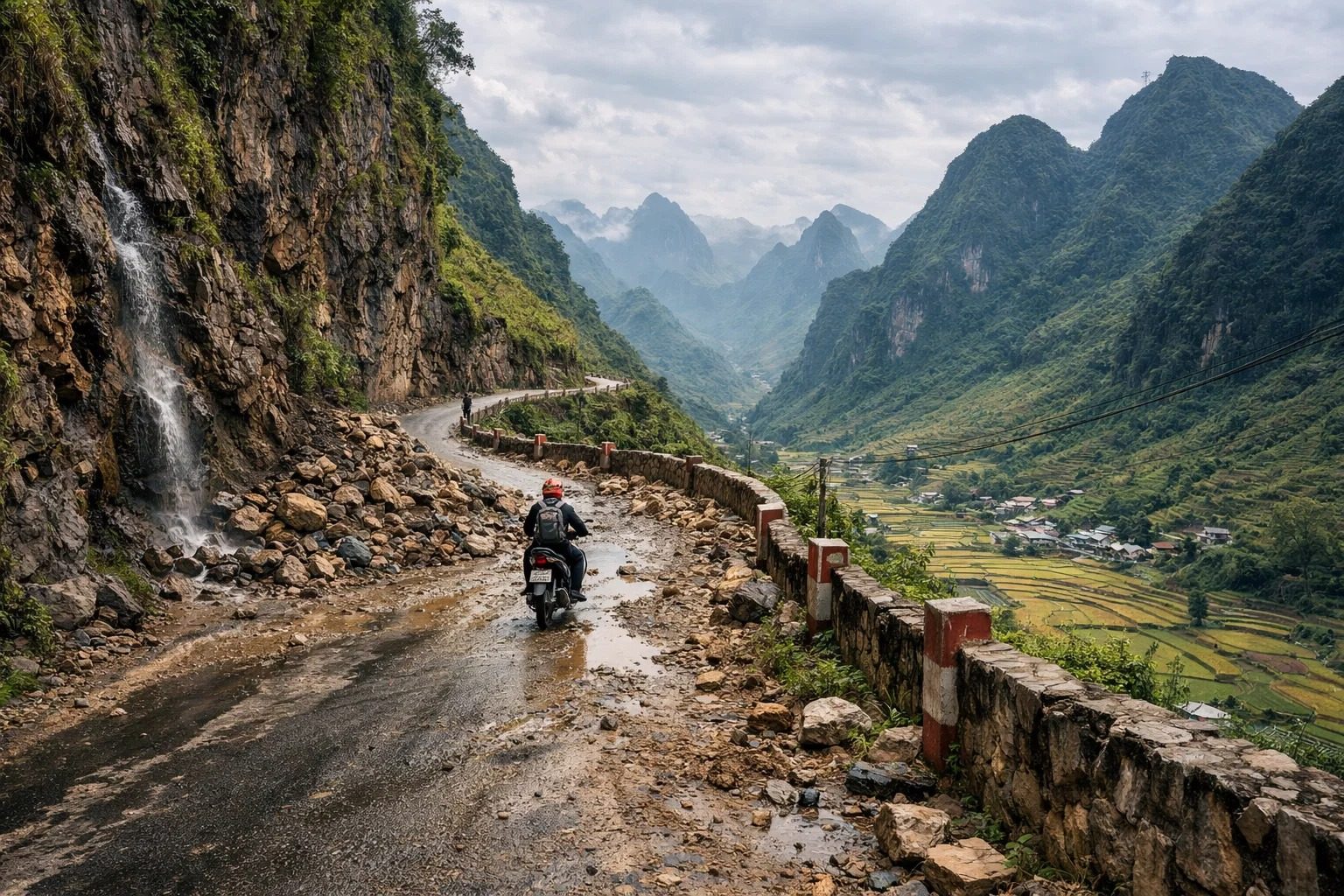
The Ha Giang Loop covers roughly 350 kilometers of mountain highway between Ha Giang City and the Chinese border, looping through Quan Ba, Yen Minh, Dong Van, Meo Vac, and Du Gia before returning south. Tour operators bundle this circuit into fixed packages, but the ha giang loop tour price varies significantly based on whether you ride solo or join a guided group, the standard of your guesthouse, and how many optional stops you add to the itinerary. Motorbike rental anchors every budget. Organized tours include the bike, helmet, and fuel in their quoted rate, removing the need to negotiate rentals or track petrol receipts. Dong Van and Meo Vac offer the widest selection, while smaller villages like Lung Tam and Du Gia have limited guesthouses that fill quickly during dry season weekends. Most tour packages include breakfast and dinner but leave lunch unstructured, allowing riders to stop where the road and appetite align. The Ha Giang Loop tour price guide also factors in permit costs. Foreign visitors must register with border police in Ha Giang City before riding into the restricted zone north of Quan Ba — a free process that requires your passport and takes 15 minutes at the immigration office on Tran Hung Dao Street. Tours handle this registration as part of the package. Riding the loop during summer brings clear skies and full visibility across the Dong Van Karst Plateau, a UNESCO Global Geopark recognized for its limestone formations and fossil record. September and October add golden rice terraces to the landscape, while December through February can close high passes with fog and frost. Most riders complete the circuit in three days, overnighting in Quan Ba or Yen Minh, then Dong Van or Meo Vac, before returning to Ha Giang City on day three. Four-day itineraries add a night in Du Gia or extend time in Dong Van for Sunday market visits.
Planning a budget for the Ha Giang Loop requires accounting for daily operational costs such as vehicle hire, fuel, lodging, and nourishment. These expenses vary depending on whether you choose to self-drive or hire a local guide for the journey.
How to spend less
Access to the Ha Giang loop road network is free of charge. Travelers should note that individual attractions located along the route require separate admission fees.
Most riders complete the Ha Giang Loop over three or four days, covering approximately 350 kilometers through mountain passes and ethnic minority villages. This structure helps you estimate accommodation nights, fuel stops, and meal costs across the journey.
Depart Ha Giang city by 08:00, ride north through Quan Ba (Heaven's Gate viewpoint) to Yen Minh district—roughly 100 kilometers requiring 4–5 hours with photo stops. Book guesthouses in advance during peak season.
Navigate the Dong Van Karst Plateau, passing through Dong Van town and the Lung Cu flagpole before reaching Meo Vac—approximately 80 kilometers over 5–6 hours due to steep climbs. Fuel stations are sparse; fill up in Dong Van.
Tackle the Ma Pi Leng Pass in morning light when visibility is clearest, then descend along the Nho Que River to Du Gia—70 kilometers taking 4–5 hours. The pass requires full attention; road conditions vary by season.
Return south via alternative routes through Bac Me or retrace the main road—100 kilometers, allowing 4 hours plus stops for meals and rest before returning bikes by 17:00. Settle fuel deposits and damage checks at rental shops.
Prepare these essentials before departing for the Ha Giang Loop to ensure safe travel and regulatory compliance.
Everything you need to know about ha giang loop tour price
A standard ha giang loop tour price depends on whether you choose a self-drive or easy-rider experience, as well as the duration of your trip. Most packages cover accommodation, meals, and motorbike rental within their quoted rates.
While you may find a competitive ha giang loop tour price, keep in mind that some personal expenses, such as additional snacks or beverages, are typically excluded. It is wise to carry small denominations of local currency for minor incidentals.
Variations in the ha giang loop tour price often reflect the quality of homestays, the experience level of your guide, and the inclusion of safety equipment. Prioritizing reputable services ensures better bike maintenance and more reliable support throughout your journey.
To manage your overall travel expenses, research the inclusions of your chosen excursion package ahead of time. Keeping track of fuel, meals, and local attraction costs will help you stay within your planned budget.
Essential Ha Giang Loop Tour Tips
Read more Tickets & toursHa Giang Loop Tour Groups
Read more Guide3 Day Ha Giang Loop Itineraries
Read more GuideHa Giang Loop Tour Route Map
Read more GuideHa Giang Loop Tour Gallery
Read more Tickets & toursHa Giang Loop Tours from Hanoi
Read more Tickets & toursHa Giang Loop Tour Companies
Read more Tickets & toursHa Giang Loop Motorbike Tours
Read more GuideBest Time to Do the Ha Giang Loop Tour
Read more